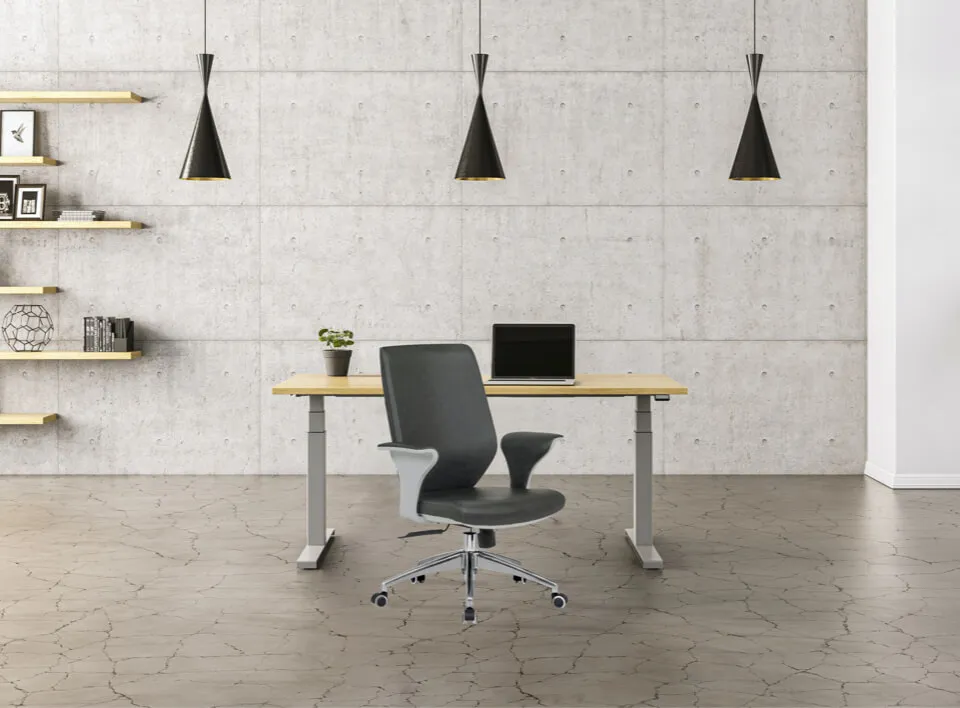
Lumbar support types: fixed, adjustable and dynamic — and which is worth paying for
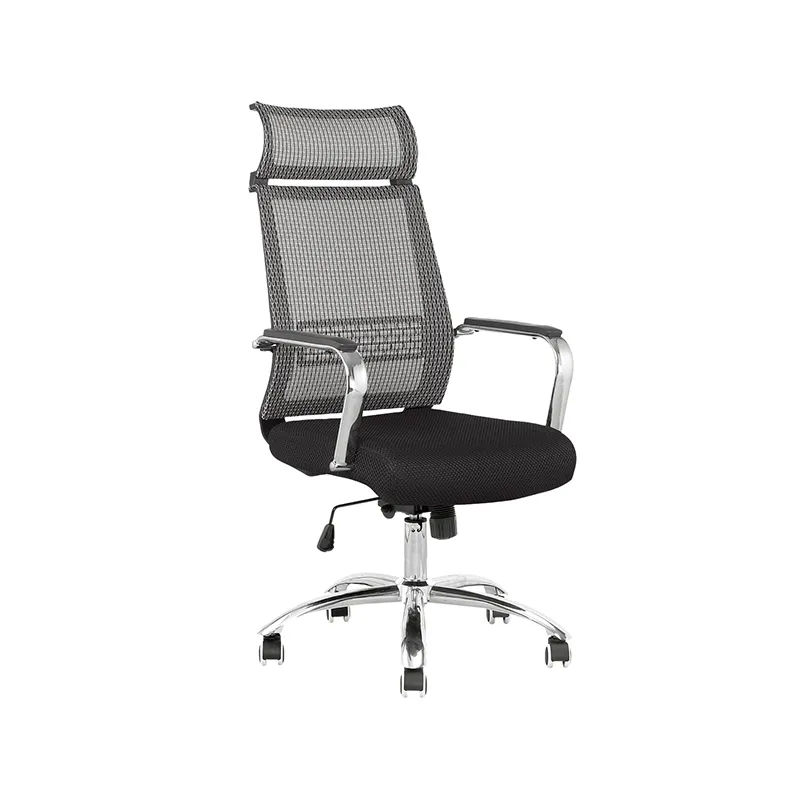
"Lumbar support" appears on every chair listing and means five different mechanisms at five different costs. Buyers who spec it as a checkbox get whichever one is cheapest that day; buyers who name the type get the chair they intended. Here is the ladder as it looks from the production side.
Why the lower back gets its own hardware
Seated, the lumbar spine wants to hold a slight inward curve. An unsupported backrest lets the pelvis roll backward and the curve flatten — comfortable for twenty minutes, tiring by hour three. Every lumbar device on the market exists to hold gentle pressure at roughly belt height. The mechanisms differ in one thing only: whether that pressure lands in the right place for *your* height, and keeps landing there as you move.
The ladder, bottom to top
Sculpted (implicit) lumbar — the backrest foam or mesh frame simply curves forward at the lumbar zone. No parts, no cost, and honest enough for meeting and visitor chairs. Its limit is anthropometry: a curve fixed at one height fits the average user and misses the tall and short ones.
Fixed pad — a distinct cushion or plastic pod at the lumbar zone. Marketing photographs well; mechanically it is the sculpted back wearing a badge.
Height-adjustable — the pad or a tension band slides 50–80 mm vertically. This is the step that changes real comfort, because lumbar height varies more between users than lumbar depth does. On mesh chairs this is usually a sliding plastic carrier behind the mesh; on upholstered backs, a pad on rails inside the cover. It adds modest cost and one moving part worth checking on the sample: it should hold position firmly — a lumbar that slides down under back pressure is a defect you can feel in ten seconds.
Depth-adjustable — a knob or lever bows the support forward and back, tuning pressure rather than position. Worth having *in combination with* height adjustment on task chairs for mixed populations; alone it fits fewer users than height does.
Dynamic / self-adjusting — spring-loaded or pivoting systems that follow the back as posture changes, holding contact through recline. Done well this is the premium experience; done cheaply it is a squeak generator with a brochure. The tell is cycle discipline: springs and pivots are fatigue parts, so ask how the mechanism was cycled in testing and handle a sample that has been through it, the same way you would check any moving part on a chair sample.
Mesh changes the question
On an upholstered back, foam does part of the lumbar's work. On a mesh chair the mesh tension *is* the support, so two extra specs matter: the mesh weave and tension at the lumbar zone (some backs weave a stiffer band there), and whether the frame's curvature actually matches seated geometry — points we treat in the mesh vs PU vs fabric comparison. A height-adjustable lumbar carrier behind mesh is the standard mid-market answer and earns its cost.
Picking per market, honestly
Visitor and meeting chairs: sculpted is enough — spend the money on the frame. Volume task chairs for e-commerce: height-adjustable is the sweet spot; it demos well in reviews and genuinely fits more bodies. Contract and tender work: height + depth, because specification sheets ask for both and the population is unknown. Premium and executive: dynamic systems, from a factory that can show the fatigue testing rather than assert it — the same evidence habit as everything else in judging a good chair.
The one-line spec that prevents the checkbox problem: *"Lumbar: height-adjustable, ≥60 mm travel, holds position under 300 N back load."* Nine words and a number — and the listing phrase "ergonomic lumbar support" becomes a component you can inspect instead of an adjective you hoped about.