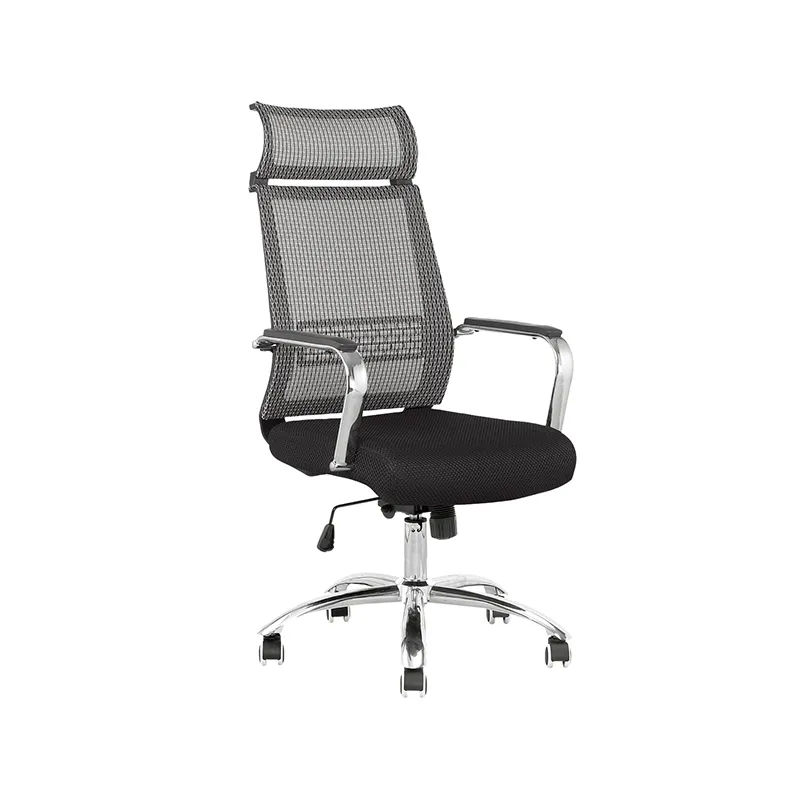
Heavy-duty office chairs: what actually changes for big-and-tall ratings

Every catalogue has a chair with a bold weight rating on it. Some of those numbers describe engineering; some describe optimism. The difference matters more in this category than anywhere else, because the buyer of a heavy-duty chair is precisely the user the ordinary chair was not designed for — and the failure modes are not cosmetic.
A rating is a system claim, not a sticker
An office chair's rated load is carried by a chain: seat pan → mechanism plate → cylinder → base → casters. The chain is as strong as its weakest link, and this is the first thing to understand about "150 kg" printed on a listing: if any single component is the standard part, the number is decoration. Real heavy-duty chairs change the whole chain, and each change is physically checkable.
The cylinder moves from the common Class 3 to Class 4 — thicker column wall, larger overlap between tubes, higher tested load. The class is stamped on the cylinder itself, which makes this the easiest claim on the chair to verify: tilt it and read the metal, a habit we recommend for gas lift safety generally. The mechanism plate goes up a gauge — typically from ~2.5 mm steel to 3.0 mm or more, with added ribs where the plate meets the column cone. The base either grows in diameter, gains ribbing (nylon), or switches to steel or aluminum; a heavier user further from the axis is a longer lever arm, and bases fail at the boss where the leg meets the hub. Casters step to 65–75 mm with stronger stems. And the seat pan and back frame need wider, deeper geometry with reinforced fixing points — a heavy-duty chair that kept the standard 460 mm pan has missed the point of the category.
The standards split most buyers miss
In North America the ordinary office chair standard tests to a fixed rated occupant weight; chairs intended for heavier users have their own standard — ANSI/BIFMA X5.11, written for large occupants with higher loads throughout the sequence. In Europe, EN 1335 similarly was not written as a big-and-tall spec, and serious suppliers test heavy-duty models to elevated loads and say so in the report. The practical takeaway is a single question: "which standard, and at what load, was this specific model tested to?" A model that has only the ordinary chair report but wears a 150 kg marketing badge is claiming something its paperwork does not say. Our note on certifications by market explains how to read what a report does and does not cover.
24/7 and multi-shift is a different question again
Weight rating and duty cycle are separate axes. A control room, dispatch desk or security post uses a chair three shifts a day — three times the fatigue cycles of an office — often by users of ordinary weight. That calls for the heavy-duty chain plus wear parts chosen for service: replaceable arm pads and casters, foam at higher density so it does not pack down in a year, and a supplier able to ship spares. If your use is 24/7, say those words in the inquiry; a factory that builds for the category will answer with component specifics rather than a bigger number on the same chair.
How to buy one honestly
Specify the chain, not the sticker: Class 4 cylinder (stamped), mechanism plate gauge, base material and diameter, caster size, pan dimensions, foam density — and the test standard with its load. Then verify on the sample: read the cylinder stamp, weigh the chair (the heavy-duty chain adds real kilograms; a "150 kg chair" that weighs the same as the standard model deserves suspicion), and load-test the front edge and one armrest with your heaviest colleague before the order, not after. It is a five-minute check on the sample you were going to evaluate anyway — and it is the difference between a category that protects your warranty statistics and one that wrecks them.