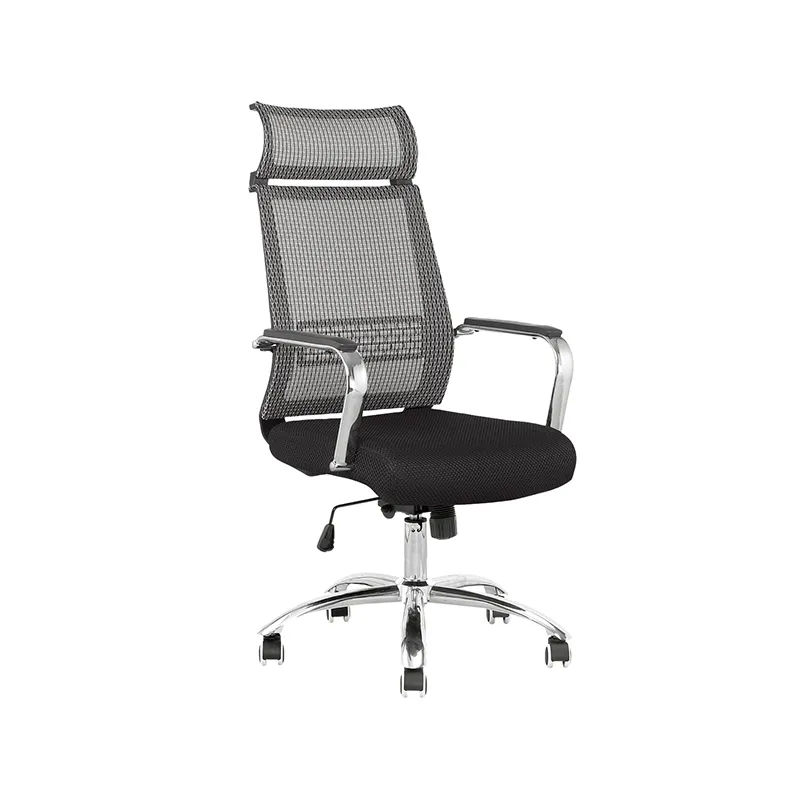
Casters and floors: the cheapest part of the chair, the loudest complaint
Of everything on an office chair, the caster is the component buyers think about least and end users complain about most. It is also the cheapest part to get right — a few cents of difference per wheel — and one of the most expensive to get wrong, because the damage it does lands on the floor, not the chair.
One decision: hard wheel or soft wheel
Casters come in two working types, and the rule is opposite to instinct. A hard (single-material) caster — usually plain PP or nylon — is for soft floors: carpet and carpet tile. A soft-tread caster — a nylon core with a polyurethane band — is for hard floors: wood, laminate, vinyl, polished concrete, tile. The soft PU band grips instead of skating, rolls quietly, and doesn't grind grit into the finish.
Put a hard wheel on a wood floor and you get the classic trio: scratches, noise, and a chair that drifts away from the desk on any slope. Put a soft wheel on deep carpet and it plows instead of rolling. Most complaints traced back to "bad casters" are actually the right caster on the wrong floor.
Why chairs drift, squeak and shed wheels
Drift is rarely the caster's fault — it is floor slope plus a hard wheel with too little rolling resistance. Soft-tread wheels or braked casters fix it. Squeaks come from dry pivots and from grit in the wheel yoke; sealed or covered yokes cost slightly more and stay quiet in dusty or long-haired environments (salons and pet-friendly offices know this problem by name). Shed wheels are a stem problem: the standard fitting is an 11 mm × 22 mm grip-ring stem, and a wheel that pops out usually means a worn grip ring or an out-of-tolerance socket in the base — which is a base quality question, not a wheel one.
There are also braked variants worth knowing: load-braked casters roll freely when someone is seated and lock when the chair is empty (labs and healthcare like them), and unloaded-braked do the reverse. For most offices, unbraked is fine; for raised platforms and control rooms, specify the brake and say which kind.
Sizes, and when to go bigger
The default office caster is 60 mm. Stepping up to 65–75 mm rolls more easily over carpet-tile edges and cable covers and looks proportionate under bigger chairs. Heavy-duty and 24/7 chairs should pair larger wheels with the upgraded base and cylinder — the caster is part of the load path, and on a chair rated for heavier users the wheel and stem are tested with everything else, a point we cover in the gas lift safety piece.
The two lines to add to your order
First: "Casters: soft-tread PU for hard floors / hard PP for carpet — mixed per this schedule", with rough percentages if your project has both floor types. A fit-out with 70% carpet workstations and 30% polished-concrete collaboration space needs two caster SKUs, and it costs nothing to say so before production. Second: "Stem: 11×22 grip-ring, pull-out force per spec; wheels sealed against fibre wrap." That sentence costs the factory nothing if their casters are good and saves you a container of drifting, squeaking chairs if they were about to be cheap.
Ask us to show both caster types on your sample chair — it is a thirty-second swap, and rolling each across the actual floor sample settles the choice better than any datasheet. Then the schedule goes into the spec your sample gets approved against, and the wheels stop being anyone's problem.