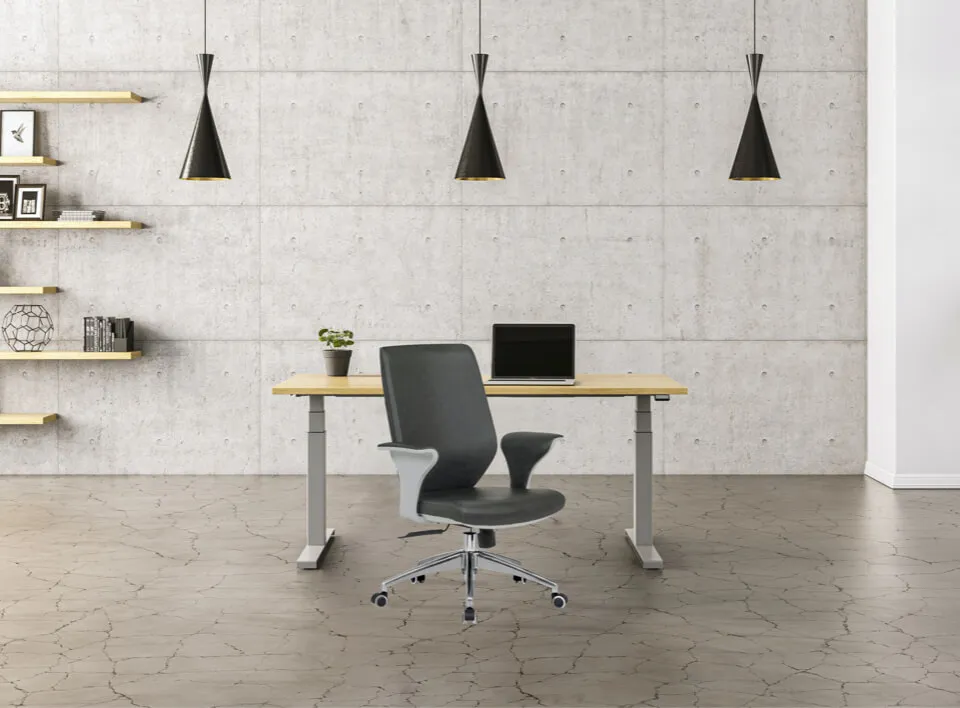
Office chair vs. regular chair: what you're actually paying for
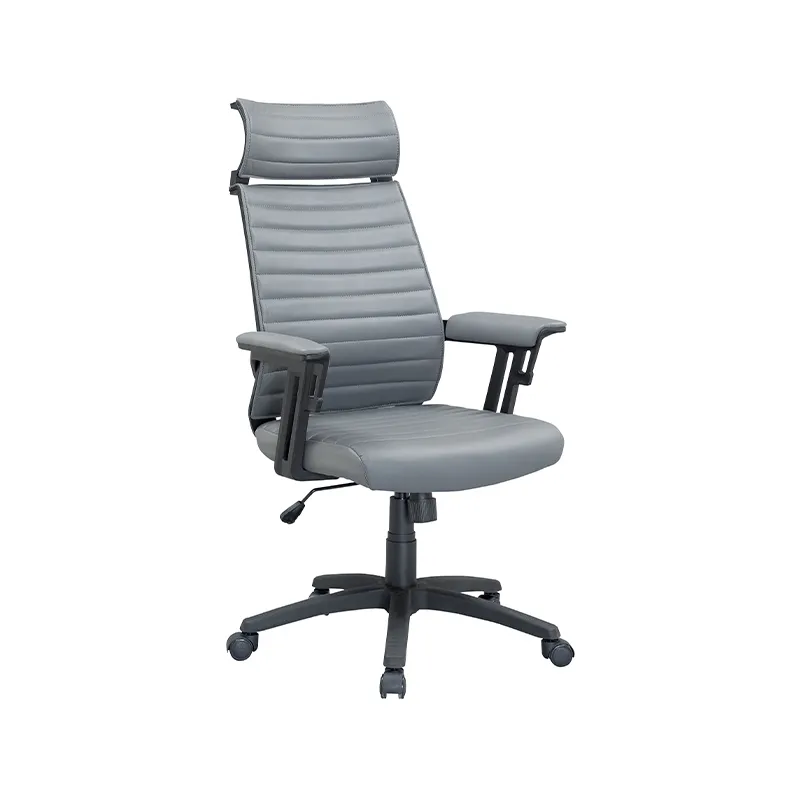
Ask ten people the difference between an office chair and a regular chair and most will say "one has wheels." That's not wrong. It's just not the part that matters.
We've been building seating in Anji for over twenty years. The chairs that come back with complaints almost never fail at the fabric or the colour — the things buyers stare at in photos. They fail at the parts nobody photographs: the gas lift, the mechanism, the base. So let's talk about those.
A regular chair holds you. An office chair *moves* with you.
A dining or banquet chair has one job: hold a person who sits down, eats, and gets up. The load is short and mostly straight down. You can build that out of a wood or steel frame and a foam pad and it'll last years.
An office chair carries a person who leans back, rolls sideways, stands up and drops back down forty times a day, for years. That's not a static load — it's thousands of small shocks and twists. Everything underneath has to survive that.
That's why a real office chair has four parts a regular chair doesn't:
- A gas lift that raises and lowers you, and absorbs the drop every time you sit.
- A mechanism (the metal housing under the seat) that lets the chair tilt and recline without tipping.
- A five-star base wide enough that you can't tip it by leaning.
- Casters rated to roll under load on your floor type.
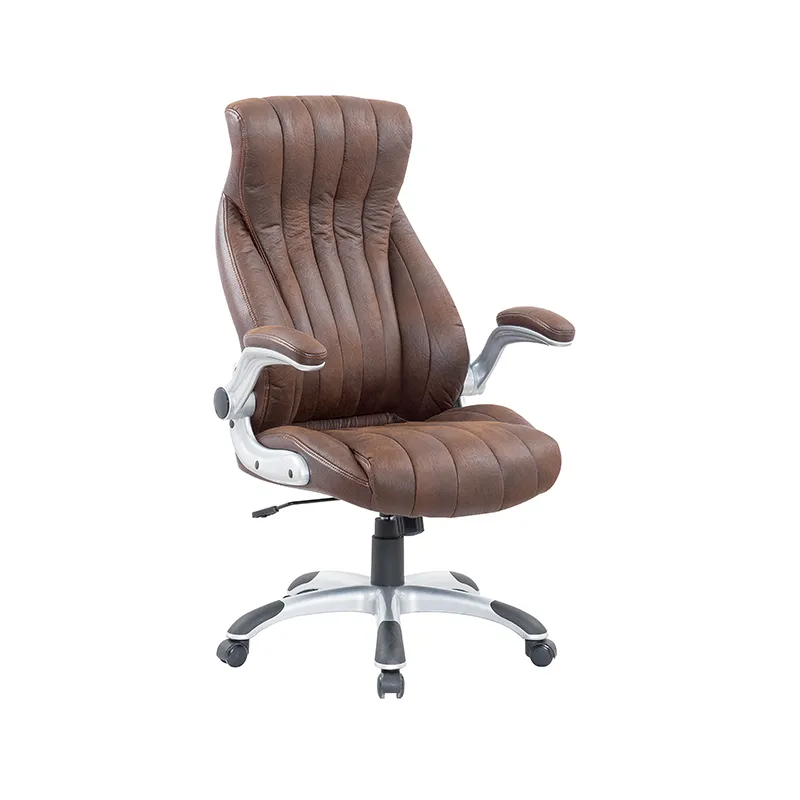
The gas lift is where cheap chairs get dangerous
If we could give first-time buyers one piece of advice, it's this: ask about the gas lift class before you ask about anything else.
A gas lift is a sealed cylinder of pressurised gas. A good one is rated and tested — you'll see "SGS Class 3" or "Class 4". A bad one is a cost saving of a few cents that, in rare cases, has failed under people. This is the one component where "cheapest" is a genuinely bad idea, and it's the first thing a serious factory will be able to tell you about. If a supplier can't name the gas lift class in their chair, that tells you something.
"Ergonomic" is a real thing, not a sticker
The word gets slapped on everything. Strip away the marketing and ergonomic just means the chair adjusts to the body instead of forcing the body to adjust to the chair. In practice that's:
- Lumbar support that meets the curve of your lower back (fixed, or adjustable up/down).
- Seat depth and height that fit different leg lengths.
- A synchro mechanism where the backrest reclines and the seat follows at a gentler angle, so you don't slide forward.
- Armrests that get out of the way of a desk.
A regular chair has none of this, and for a thirty-minute meeting it doesn't need it. For a person sitting eight hours, every one of these is the difference between "fine" and "my back hurts by Wednesday."
What durability actually looks like
In the industry, chairs are built and tested to BIFMA standards — a set of physical tests that simulate years of use: dropping weight onto the seat tens of thousands of times, slamming the back, rolling the casters under load for miles. In our own plant we run fatigue and load-bearing tests for exactly this reason: a chair that looks perfect can still fail at 5,000 cycles if the mechanism welding is weak.
When you compare a $9 chair and a $39 chair, you're usually not paying for nicer fabric. You're paying for a frame that survives the test, a gas lift that's certified, and a mechanism that doesn't loosen. The photo looks the same. The 30,000th sit-down does not.
So which one do you need?
If you're furnishing a waiting room or a canteen, a sturdy regular chair is the right, cheaper answer — don't over-buy. If you're selling to people who *work* in the chair, or you're putting your brand on it for resale, the office chair's hidden parts are exactly what protects your reviews and your reorders.
That's the honest version. We make both, and we'll tell you which one fits your use and your budget — including when the cheaper option is the smarter one.
If you're sourcing chairs and want a straight answer on specs, gas lift class, or what a given target price can actually buy, email us at mail@ajrt.net or send a message through the site. Tell us the use case and the quantity; we'll come back with options, not a sales pitch.