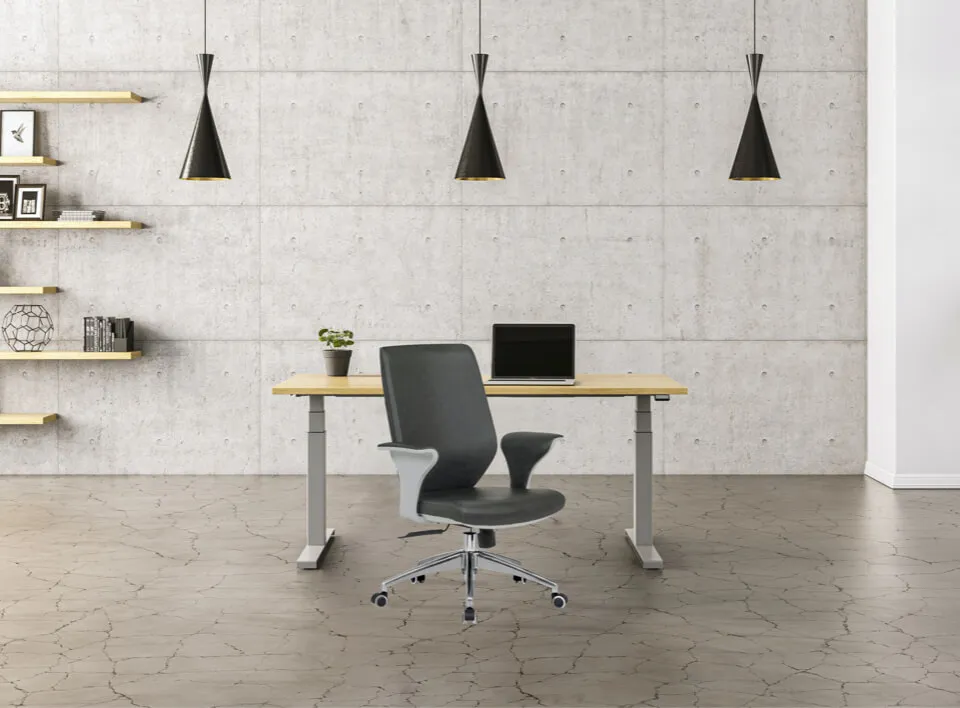
Anatomy of an ergonomic office chair: the 7 parts that decide comfort
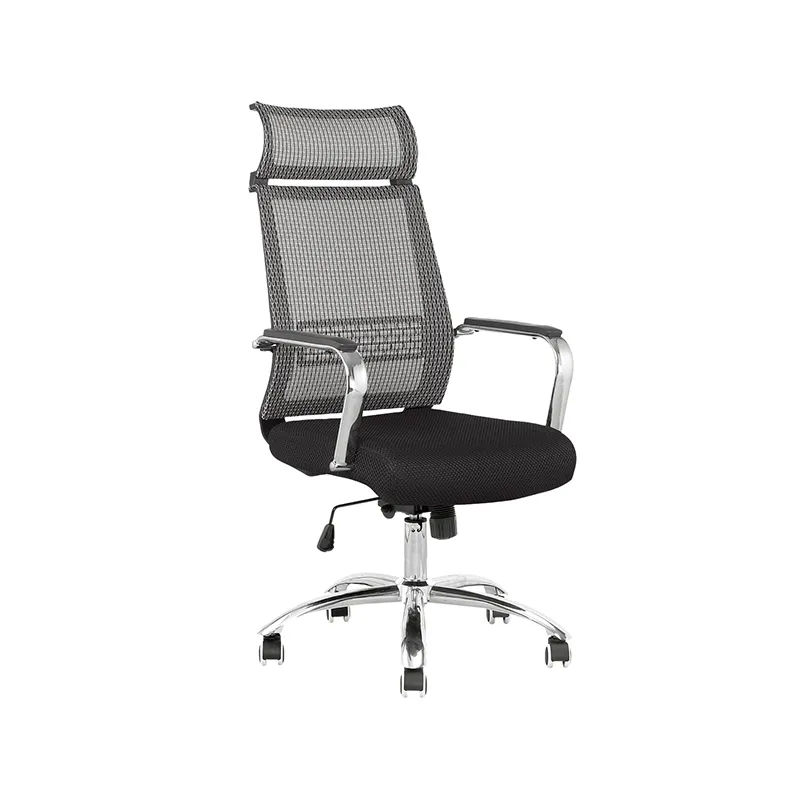
"Ergonomic" is the most oversold word in our industry. So let's do the opposite of marketing and just take a chair apart. There are seven parts. If you understand them, you can read any spec sheet and know exactly what you're getting — and what a target price can actually buy.
1. The backrest (and lumbar)
The back is what people feel first. What matters isn't how tall it is, it's whether it supports the curve of your lower back. Three levels, cheapest to best:
- Fixed lumbar — the curve is moulded in. Fine for budget lines.
- Adjustable lumbar — slides up and down to fit different heights of people.
- Dynamic lumbar — flexes as you move.
For mesh chairs, the back frame matters as much as the mesh: a weak frame bows over time no matter how good the weave.
2. The mechanism
The metal housing under the seat that controls tilt. This is the heart of the chair and the part you can't see in a photo:
- Basic tilt — the whole chair rocks from one point.
- Synchro-tilt — back and seat recline together at a 2:1 ratio, so you don't slide forward. This is what "ergonomic" really means in motion.
- Multifunction — adds locking positions and seat-depth slide.
A weak mechanism is where cheap chairs die. We weld and fatigue-test ours because a chair can look perfect and still loosen here at a few thousand cycles.
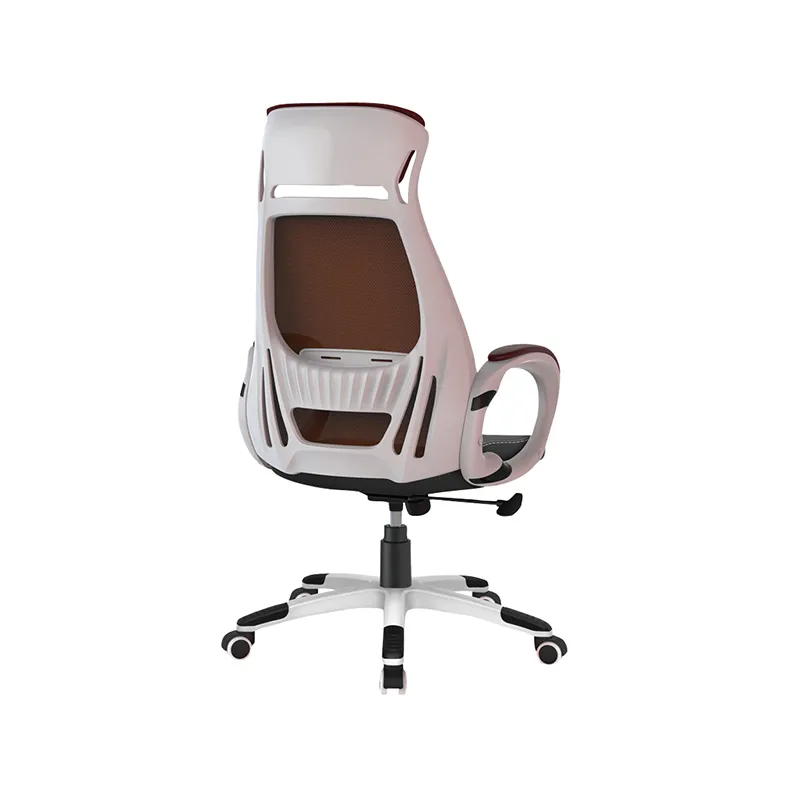
3. The gas lift
The cylinder that raises and lowers you. Always ask for the SGS class (3 or 4). It's the chair's main safety part and the easiest place to cut a few cents — don't let anyone cut it. A rated cylinder also keeps its height instead of slowly sinking over a year.
4. The seat (foam + edge)
A good seat uses moulded foam with the right density — soft enough to be comfortable, firm enough not to bottom out onto the board. The front should have a waterfall edge that curves down, so it doesn't press the back of your knees. Flat, hard front edges are a cheap-mould giveaway.
5. Armrests
The most under-rated part. Options run from fixed, to height-adjustable (2D), to 3D and 4D (height, width, depth, pivot). For desk work, even simple height-adjustable arms that tuck under the desk beat fancy fixed ones. Match the arm to the use, not the brochure.
6. The base
A five-star base, wide enough that leaning back never lifts a leg. Metal (aluminium or steel) for heavier-duty and a premium feel; reinforced nylon for lighter, cost-driven lines. Both are fine — as long as the base matches the rated load.
7. Casters
Small part, big effect. Hard casters for carpet, soft (PU) casters for hard floors — the wrong type either won't roll or will scratch a customer's floor and earn you a bad review. Always tell your supplier the floor type your market uses.
How to use this when you buy
Next time a supplier sends a spec sheet, go down these seven. If a line is vague — "high-quality mechanism," "comfortable foam" — ask the specific question: which synchro ratio? what foam density? which gas lift class? A factory that knows its own product answers in a sentence. A trader usually has to "check with the factory."
That's the real ergonomics conversation, and it's the one we'd rather have with you than a sales pitch. Tell us your use case and target price at mail@ajrt.net or through the site, and we'll map these seven parts to a chair that fits both.